The Connected Self for Christian High School Students
A self-paced Christian curriculum integrating psychology, neuroscience, emotional intelligence, and practical life skills
Understand Yourself. Relate Wisely. Grow in Christ.
The Connected Self helps students understand how thoughts, emotions, relationships, experiences, and habits shape the person they are becoming, while exploring what it means to understand themselves within the larger reality of God’s design, truth, grace, and purpose.
Designed for high-school-age learners, The Connected Self is available directly to individual students and families, as well as to microschools, hybrid schools, homeschool cooperatives, and other Christian educational communities.
Students can work through the course independently or experience it as a Christian formation elective, life-skills curriculum, or facilitated small-group course.
Students are surrounded by messages about identity, emotion, relationships, success, belonging, and self-worth.
The Connected Self helps them examine those messages through a framework that respects both what we know about the human mind and brain and what Scripture teaches about the human person.
The goal is not simply better emotional management.
The goal is greater wisdom, self-understanding, personal responsibility, relational maturity, and a life increasingly shaped by truth.
Students Need More Than Information
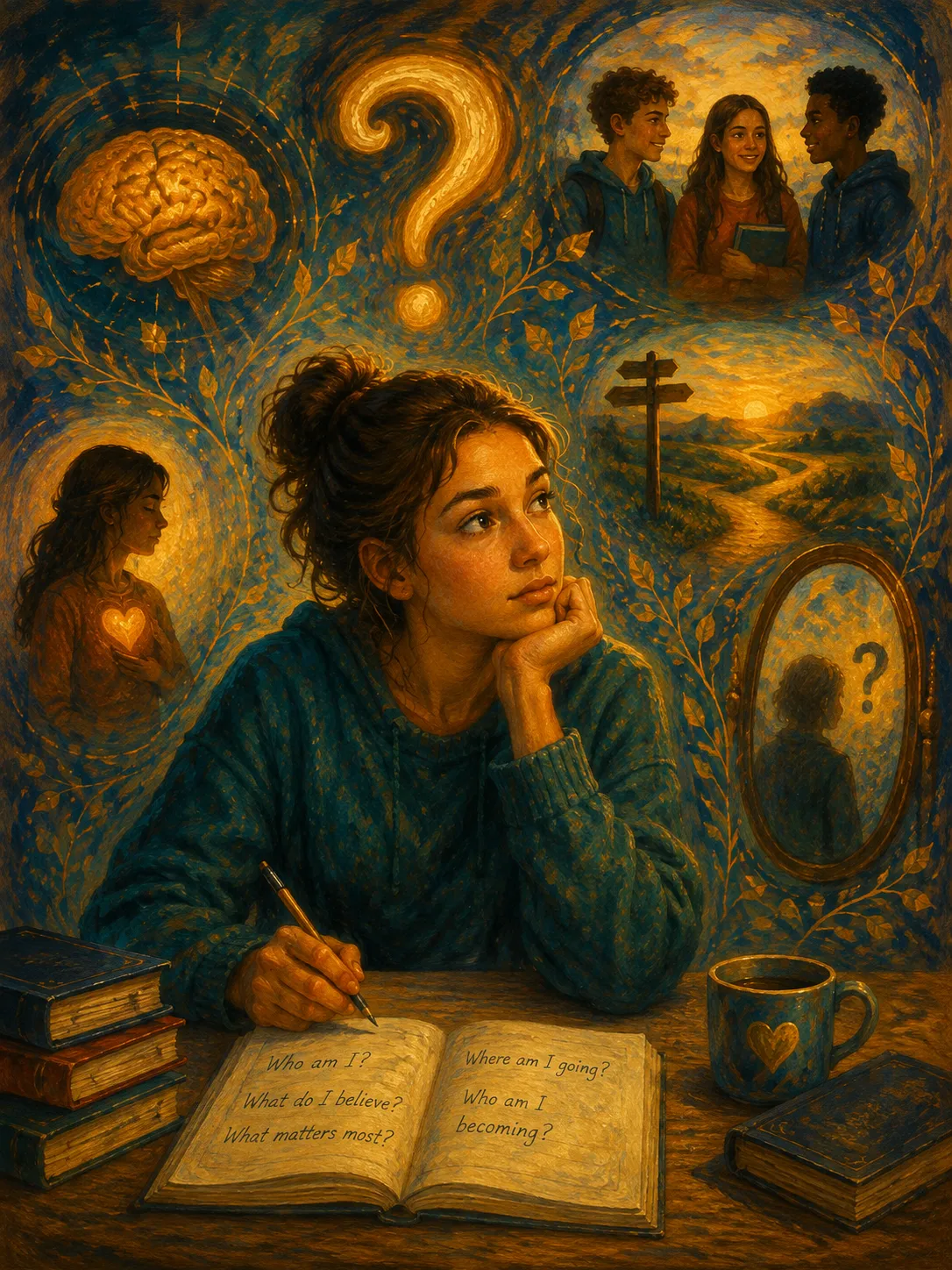
Adolescence is a season in which young people are forming answers to some of life’s most important questions:
Who am I?
What do I do with what I feel?
Why do I respond the way I do?
How do relationships shape me?
How do I make wise decisions when emotions are strong?
What should define my identity?
Students are surrounded by messages about identity, emotion, relationships, success, belonging, and self-worth.
The Connected Self helps them examine those messages through a framework that respects both what we know about the human mind and brain and what Scripture teaches about the human person.
The goal is not simply better emotional management.
The goal is greater wisdom, self-understanding, personal responsibility, relational maturity, and a life increasingly shaped by truth.
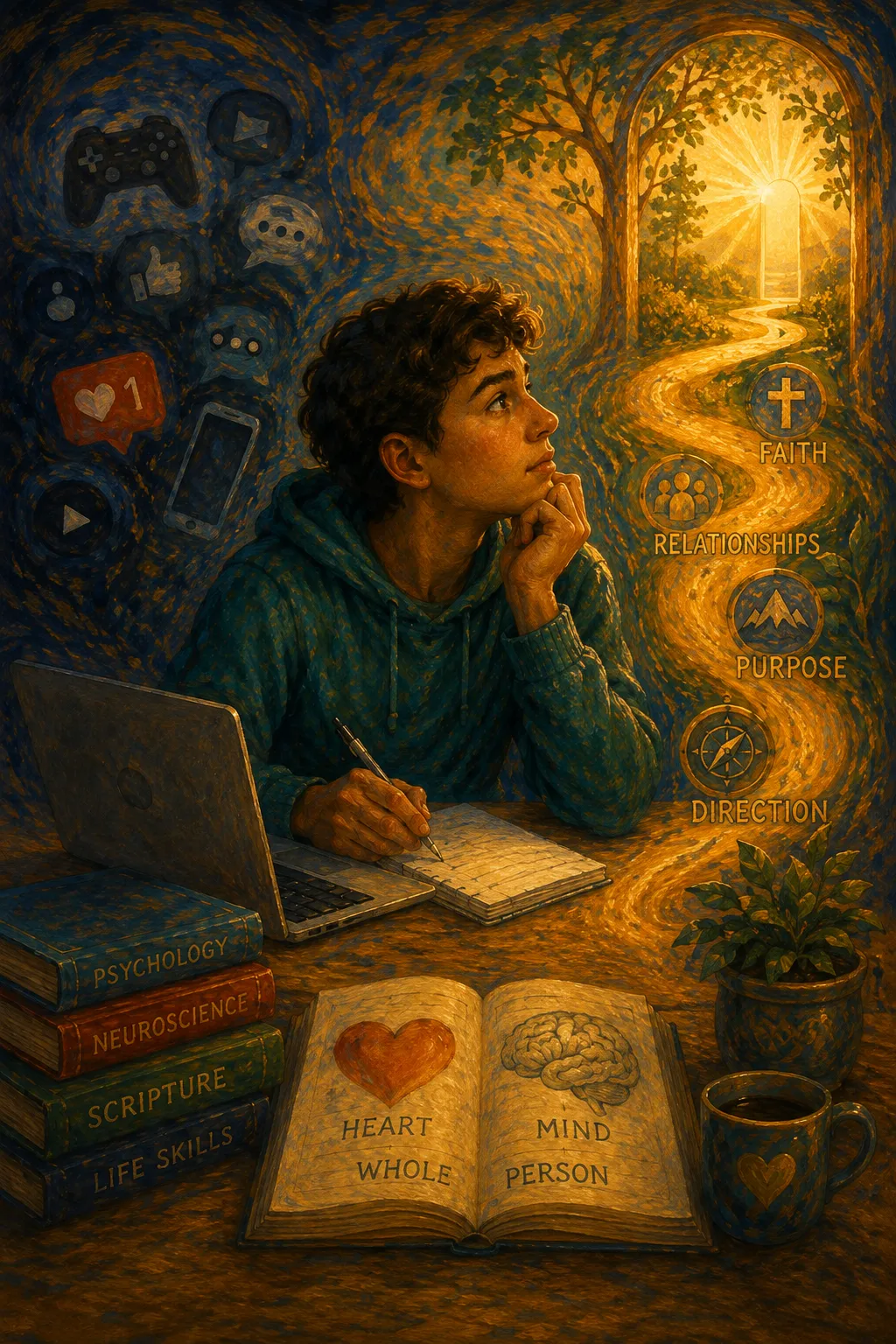
A Christian Approach to Understanding the Whole Person
The Connected Self begins from a distinctly Christian understanding of human beings.
Students are not simply brains to regulate, emotions to manage, or behaviors to correct.
They are created by God, formed through relationships and experiences, capable of growth and responsibility, and invited into an increasingly truthful understanding of themselves, others, and God.
Throughout the course, students explore psychological and neuroscience concepts alongside Christian teaching about identity, wisdom, relationships, responsibility, grace, transformation, and spiritual formation.
Psychology and neuroscience are not presented as replacements for faith.
They are used as tools that can help students better understand the ways human beings think, feel, relate, learn, respond, and change.
What Students Explore
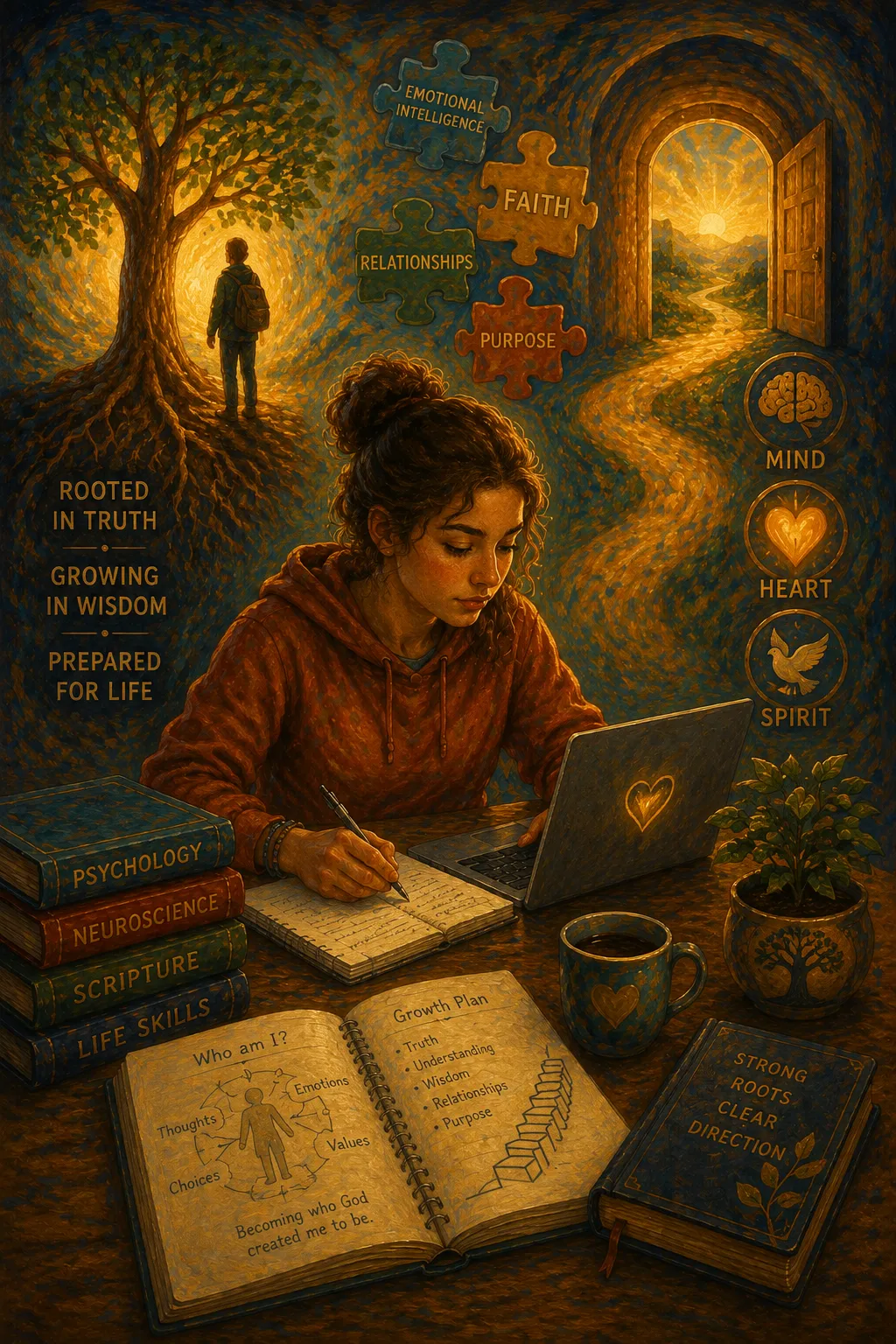
Across 55 short learning modules, students explore topics related to:.
emotional awareness and emotional intelligence
how the brain responds to stress, fear, and relationships
thoughts, beliefs, and patterns of behavior
attachment and relational development
healthy boundaries
communication and conflict
personal responsibility and decision-making
shame, self-protection, and vulnerability
resilience and emotional regulation
habits and patterns that influence relationships
identity and self-understanding
the impact of past experiences without allowing the past to define the future
healthy connection with others
spiritual growth and Christian formation
developing a life increasingly organized around truth rather than fear, pressure, or circumstance
WHY CHOOSE US
How the Course Works
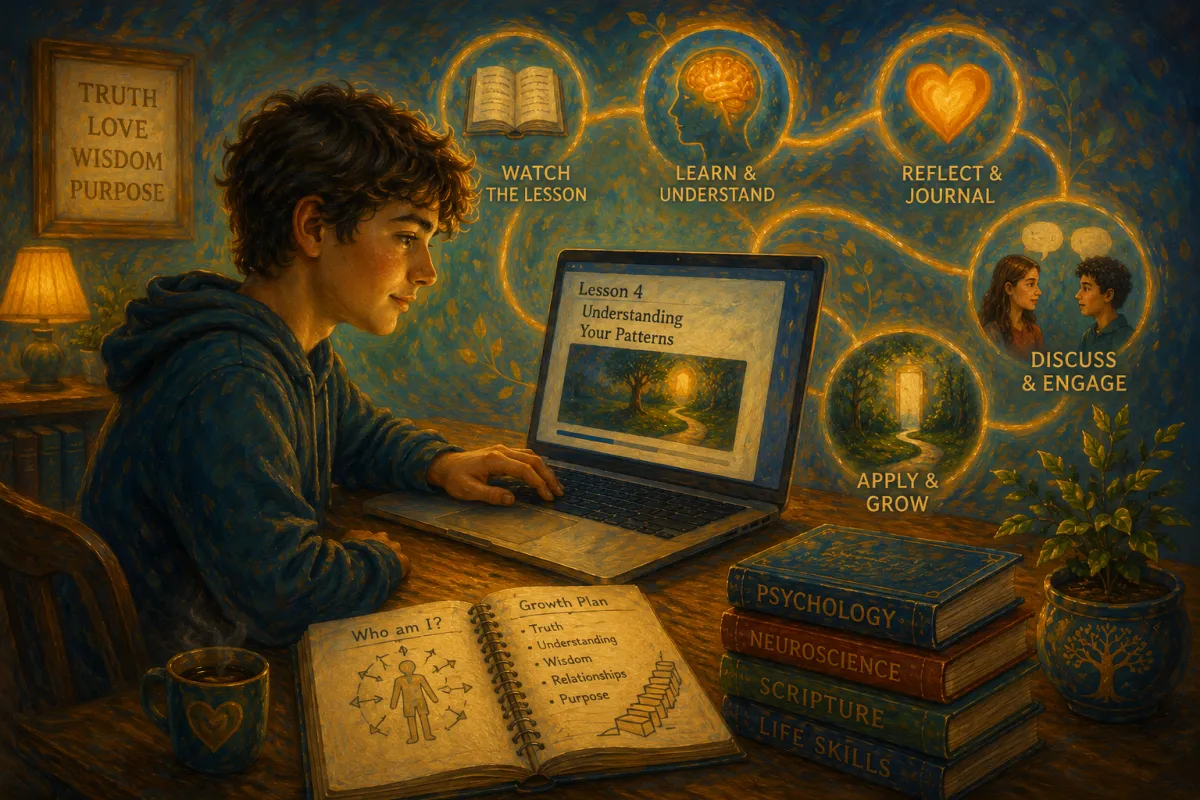
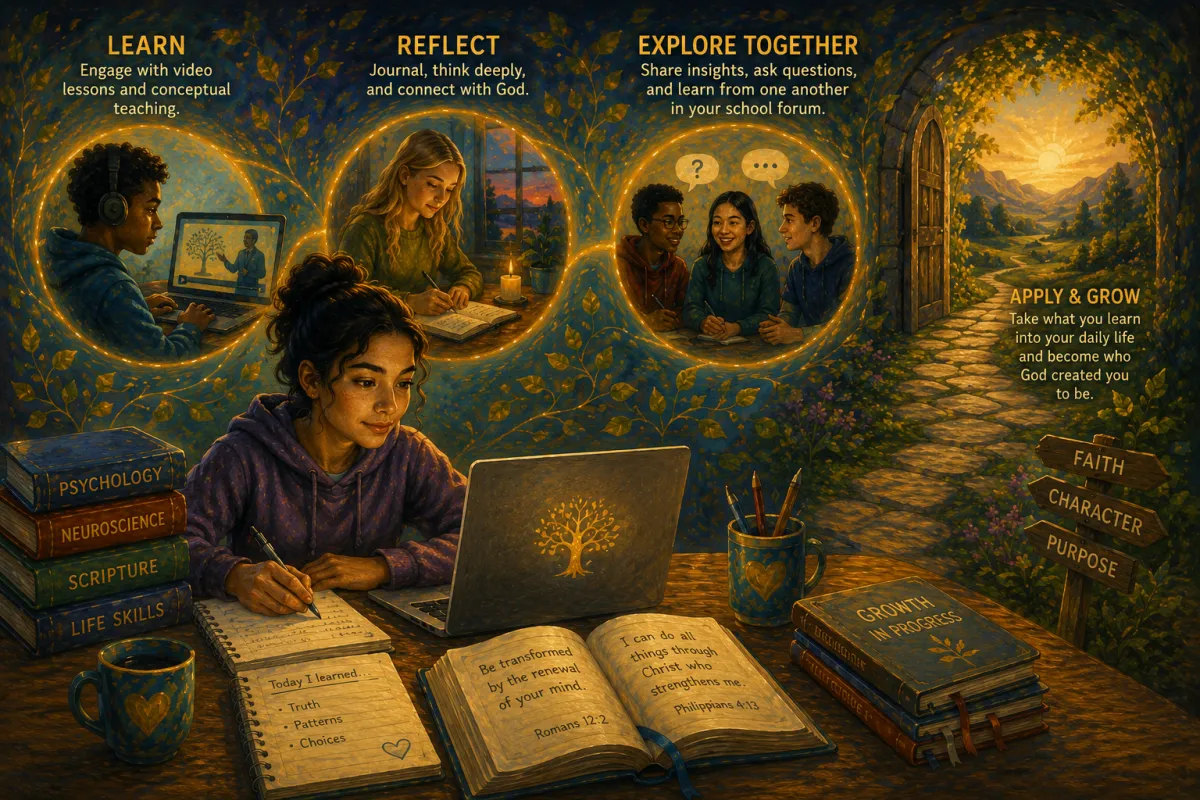
Self-Paced Video Lessons
Students move through engaging, prerecorded lessons at a flexible pace.
Complex concepts from psychology and neuroscience are explained in accessible language using visual storytelling, metaphors, examples, and memorable characters.
Practical Exercises
Lessons include activities designed to help students apply what they are learning to real-life situations.
Rather than simply memorizing concepts, students are invited to notice patterns, make connections, and practice new ways of thinking and responding.
Reflection & Journaling
Guided reflection encourages students to think more deeply about their experiences, choices, relationships, beliefs, and developing identity.
Personal journaling may remain private. When participating in a class, group, or online community, students choose what they wish to share with others.
Optional Group Discussion
Students may complete the course entirely independently, or lesson themes and reflection questions can be used as the basis for optional facilitated discussion with a parent, educator, mentor, or small group.
This allows students to learn at their own pace while also providing opportunities for thoughtful conversation and deeper reflection within a trusted Christian learning community.
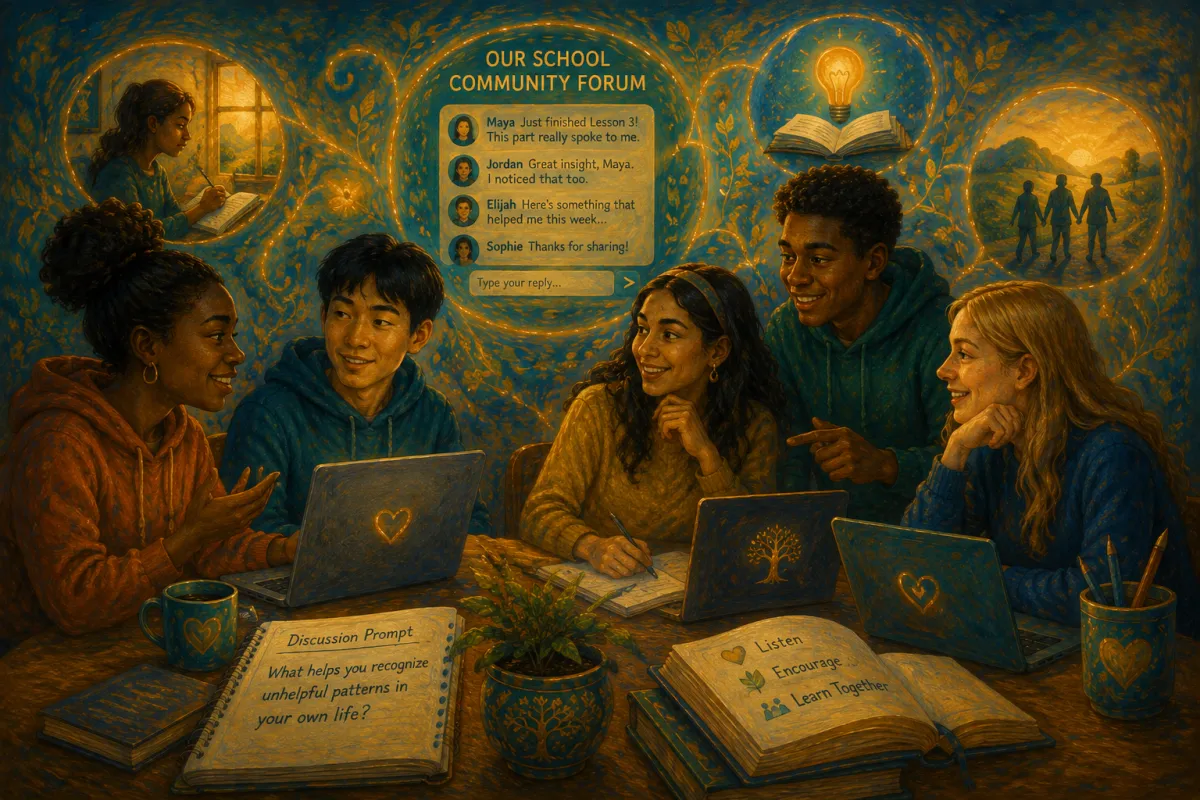
A Private Online Community for Schools and Learning Groups
Schools and participating learning communities can have their own private Connected Self online forum, creating a dedicated space where learning can continue beyond the individual lessons.
Within their learning community, students can respond to course-related discussion prompts, share insights they choose to share, ask questions, and engage thoughtfully with other students as they explore the ideas introduced throughout the course.
Designated educators or facilitators can also participate in the forum, encouraging conversation, posing questions, connecting course concepts to the life of the learning community, and helping students engage more deeply with what they are learning.
The forum allows a self-paced course to become a shared learning experience while preserving the flexibility of independent learning.
Personal journaling and private reflection remain separate. Students are never expected to post personal disclosures or private journal entries in the forum. They choose what they wish to contribute to the learning community.
Taking the course independently?
Individual students can complete the full curriculum without participating in a school or group forum.
Flexible Enough to Fit How Students Learn
The Connected Self is designed to work in a variety of learning environments. Students can take the course independently at home, while schools and learning communities can incorporate it into their existing programs.
Independent Study
Students can complete the course independently at home, working through the video lessons, reflections, and practical exercises at their own pace.
A High School Elective
Schools and homeschool families can use The Connected Self as a semester or year-long course focused on Christian formation, emotional intelligence, and practical life skills.
Small-Group Curriculum
Students complete lessons independently and come together with a parent, educator, mentor, or group for discussion and application.
Christian Formation or Advisory Curriculum
Schools can incorporate the course into discipleship, worldview, character development, advisory, or life-skills programming.
.Whether used by one student at home or within a larger learning community, the course is designed to preserve the flexibility of self-paced learning while creating opportunities for meaningful reflection, discussion, and application.
Why This Matters During Adolescence
High school is not only preparation for college or employment. It is preparation for adulthood.

Young people are learning how to handle disappointment, navigate relationships, understand their emotions, make decisions, establish boundaries, respond to failure, take responsibility, and determine what will ultimately shape their identity. Many students receive extensive academic preparation without ever being intentionally taught how to understand the inner processes that influence their relationships and choices.

The Connected Self gives students a framework for developing that understanding before they enter adulthood.

Faith and Science in Conversation
Christian students should not have to choose between serious engagement with psychology and neuroscience and a faithful Christian understanding of the person.
The Connected Self intentionally brings these conversations together.
Students learn about concepts such as brain development, emotional responses, attachment, thought patterns, habit formation, and human relationships while continually returning to deeper questions:
What is true?
What kind of person am I becoming?
What is shaping my identity?
How do I respond wisely rather than react automatically?
What does it mean to live faithfully in the world God has created?
This integration allows students to engage contemporary psychological knowledge without allowing psychology itself to become their ultimate framework for understanding human identity.
Created by a Licensed Psychotherapist and Christian Educator
The Connected Self was created by Lori Olson, MS, LMHC, a licensed psychotherapist with more than 15 years of clinical experience working with individuals, relationships, emotional development, attachment, trauma, play therapy and patterns of human behavior.
Her work integrates psychology, developmental understanding, neuroscience, Christian faith, and practical tools for change.
The Connected Self grew from a desire to make many of the concepts that help adults understand themselves available earlier in life - before years of unhealthy patterns become deeply established.
The result is a course designed to help young people develop greater self-understanding while grounding that understanding in a Christian view of identity, responsibility, relationship, and transformation.
THE JOURNEY
Educational Curriculum-Not Psychotherapy
The Connected Self is an educational curriculum.
It does not provide psychotherapy, mental-health diagnosis, individualized treatment, or crisis services.
The course teaches general educational concepts related to psychology, neuroscience, relationships, emotional intelligence, personal development, life skills, and Christian formation.
Students experiencing significant emotional or mental-health concerns should receive appropriate support from parents, qualified professionals, and other trusted adults.
READY TO LEARN MORE?
Bring The Connected Self to Your Student or School
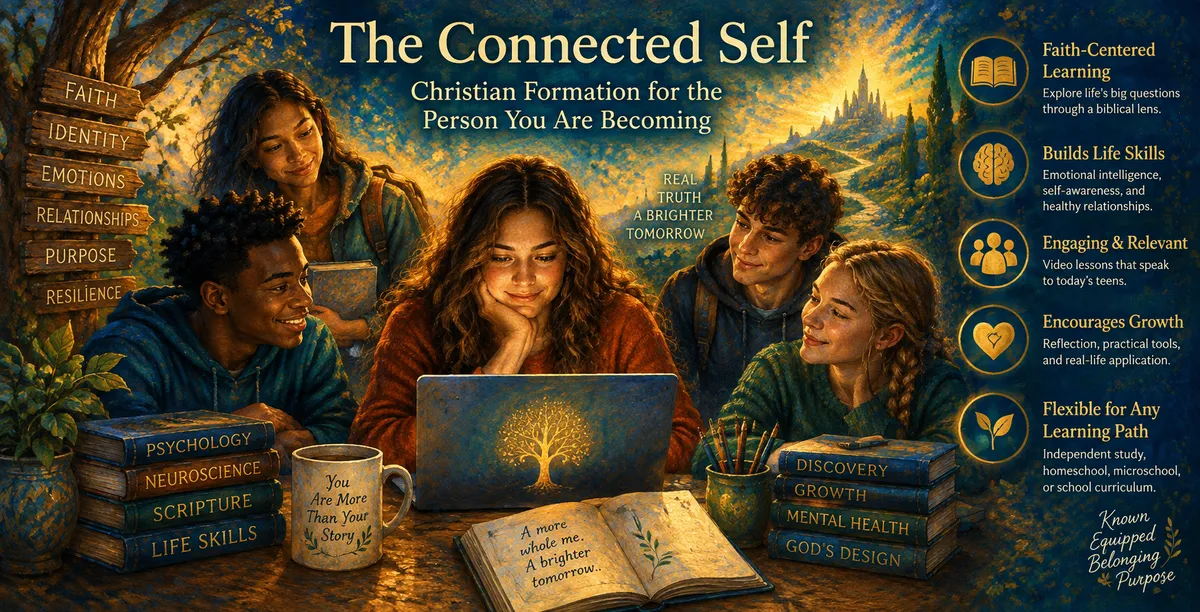
Whether you are a parent looking for a thoughtful Christian course for your high-school student or an educator exploring curriculum for a learning community, The Connected Self offers a flexible way to help students better understand themselves, their relationships, and the person they are becoming.
Individual students and families can enroll directly. Schools, microschools, hybrid programs, and homeschool cooperatives can also use The Connected Self as part of their educational or Christian formation programming.
Interested in enrolling a student, previewing the curriculum, or exploring its use in your school or learning community?
THE First STEP
Let's Talk
We are honored that you are considering The Connected Self course for your educational needs. Please fill out the inquiry form below to schedule a personal conversation.
The Connected Self
Christian Identity, Emotional Intelligence & Life Skills
A program of Attachment and Experiential Therapy, LLC

© 2026 Attachment and Experiential Therapy, LLC. All rights reserved. | Privacy Policy